Flushing Meadows Proves: Top Seeds Aren't Just Hype Anymore
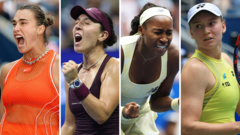
The women's draw at the US Open has produced something genuinely remarkable—a semi-final lineup that reads like a seeding chart come to life. For the first time since 1975, the tournament's top four seeds have all navigated their way through to the penultimate stage of the competition. This extraordinary convergence represents far more than a statistical oddity; it speaks to the contemporary state of elite women's tennis and raises intriguing questions about parity, consistency, and the evolution of the game at its highest echelon.
A Rare Achievement in Tournament History
Nearly five decades have passed since the women's singles draw at Flushing Meadows produced such a perfectly ordered progression of elite talent. That the top four seeds would all survive the unpredictable gauntlet of a Grand Slam tournament—where upsets, injuries, and the inherent volatility of professional sport regularly conspire against even the most dominant players—speaks to the exceptional strength and resilience of this particular cohort of competitors. The last time such an alignment occurred was in 1975, a different era of tennis entirely, when the sport was transitioning through significant cultural and competitive transformations. That nearly half a century has elapsed without a recurrence underscores just how statistically improbable and noteworthy the current achievement truly is.
The presence of all four top seeds in the semi-finals represents a validating moment for the seeding committee and tournament organizers, whose assessments of player strength and ranking have proven remarkably prescient. Yet it also reflects something deeper about the current generation of women tennis players—their professionalism, their injury management, and their ability to maintain peak performance across the demanding surface at the US Open, where the hard courts demand explosive movement and consistent depth of shot.
What This Says About Women's Tennis Today
The concentration of top-seeded talent in the semi-finals offers fascinating insights into the contemporary landscape of women's professional tennis. Unlike some Grand Slam tournaments where a breakthrough performance by an unseeded player or a lower-ranked competitor captures headlines and hearts, the US Open draw this year has unfolded with remarkable predictability at the top end of the draw. This doesn't diminish the quality of tennis on display; rather, it highlights the exceptional consistency and competitive depth of the world's elite female players. These athletes have invested tremendous resources in their preparation, their fitness regimens, and their mental resilience, and it shows in their ability to negotiate the early and middle rounds of a major championship without faltering.
The semi-final stage promises intriguing matchups between players who have been deemed the tournament favorites from the outset. Each of these athletes brings distinct strengths—different tactical approaches, varied physical capabilities, and individual psychological profiles honed through years of elite competition. The fact that none has stumbled along the way to the penultimate round speaks to the professionalization of women's tennis and the narrowing of the performance gap between the very best and the rest of the field. In an era where training methods are increasingly sophisticated and information about opponents is instantly available, maintaining the edge necessary to win matches at Flushing Meadows requires constant innovation and adaptation.
It's worth considering what this historical moment means for the tournament itself and for tennis narrative more broadly. Grand Slams thrive on storylines—the unexpected hero, the narrative redemption, the upset that reshapes perceptions. Yet they also derive tremendous value from the collision between the absolute best players in the world, when the rankings and seedings align with actual performance to produce marquee encounters between elite competitors. This year's semi-final composition delivers exactly that: a showcase of the sport's current power hierarchy, laid bare through the crucible of a major championship.
The pathway to this unprecedented semi-final configuration also illuminates something about the specific demands of the US Open. The tournament's hard courts, the weather conditions that can vary significantly during the fortnight, and the acceleration of play that comes with aggressive court positioning all favor certain player profiles. The top seeds have clearly demonstrated the adaptability and skill set necessary to excel under these particular circumstances. Their ability to weather potentially challenging second and third-round matchups, to maintain focus through the quarterfinals, and to arrive at the semi-final stage fresh and mentally sharp speaks to championship experience and professional maturity.
Looking forward, the semi-finals will determine which of these elite competitors possesses the necessary combination of form, fortitude, and tactical acuity to claim the title. The tournament will continue to produce compelling tennis, and one of these four seeded players will ultimately emerge as champion. Yet the significance of reaching this point—all four top seeds intact—cannot be overlooked. It represents a convergence of prediction and reality, a moment where the sport's hierarchies have held firm against the chaos and uncertainty that typically defines Grand Slam tennis. For statisticians and tennis historians, this semi-final lineup will be remembered as a remarkable exception to the rule, a reminder that sometimes, the favorites do indeed prevail.