Osorio Blocks Sabalenka's Quest for Queens Dominance
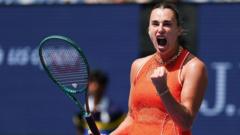
Few moments in tennis carry the weight of history quite like the opening match of a championship run. When Aryna Sabalenka stepped onto a court at the US Open, she carried with her not merely the burden of defending her title, but something far more ambitious—the genuine possibility of etching her name among the sport's immortals by claiming three consecutive championships at Flushing Meadows. The task began against Camila Osorio, an opponent whose competitive spirit and technical prowess would test the champion's resolve from the opening serve.
The significance of what Sabalenka was attempting cannot be overstated. A three-peat at any Grand Slam tournament represents an extraordinary feat, requiring not just superior tennis but the ability to maintain peak physical conditioning, mental fortitude, and competitive hunger across multiple years. The US Open, with its unforgiving hard courts and the intensity of New York's sporting atmosphere, has proven to be a particularly fitting stage for Sabalenka's rise to dominance. Her previous two triumphs at the venue established her as a formidable force, yet each new campaign presents fresh challenges, new opponents, and the ever-present danger that history might slip away.
Navigating External Pressures and Internal Focus
What made Sabalenka's opening victory particularly noteworthy was not simply the result itself, but the manner in which she achieved it. She entered the match having to contend with considerable external commentary and expectations—the sort of noise that accompanies any player attempting something historically unprecedented. Rather than allowing these distractions to influence her performance, she demonstrated the psychological sophistication that separates champions from contenders. By maintaining her focus on the fundamental elements of her game and refusing to be drawn into emotional reactions to the situation's magnitude, Sabalenka showed why she has become one of the sport's most resilient competitors.
Osorio, meanwhile, presented exactly the kind of first-round opponent that can derail even the most formidable champion. The Colombian competitor brought technical solidity and enough variation to her game to create uncomfortable moments. She possessed the capacity to construct rallies in ways that might disrupt Sabalenka's aggressive rhythm, and she possessed sufficient capability to punish hesitation or lapses in intensity. This was not a walkover, and Sabalenka's ability to manage the challenge while maintaining the mindset necessary for a deep run spoke volumes about her preparation and mental state entering the tournament.
The Path Forward and Historical Significance
The victory against Osorio served as confirmation that Sabalenka's fitness level and competitive edge remain sharp despite the considerable demands of the previous season. Any player attempting to win consecutive major championships must overcome not just the technical and tactical elements of tennis, but also the physical toll of sustained excellence. The fact that she navigated this opening test with apparent control suggested that her preparation had been thorough and her conditioning appropriate for the challenge ahead.
Looking at the broader context, Sabalenka's pursuit of a three-peat places her among an elite group of players who have genuinely challenged the modern tour's competitive parity. While previous generations occasionally witnessed players claiming multiple consecutive Grand Slam titles with somewhat greater regularity, contemporary tennis presents substantially more obstacles to such achievements. The depth of talent, the improved fitness levels across the entire professional circuit, and the psychological pressures of defending status all make consecutive major victories increasingly difficult to achieve. For this reason, Sabalenka's potential accomplishment would resonate far beyond the confines of the US Open itself.
The Belarusian's style of play—characterized by aggressive baseline striking, commanding serve placement, and powerful return capabilities—has proven particularly well-suited to the hard courts of Flushing Meadows. Her ability to dictate rallies and force opponents into reactive positions plays to her considerable strengths. However, the US Open also presents unique challenges, including the variable wind conditions, the wearing nature of the hard court surface across multiple matches, and the particular intensity that accompanies a major championship in its final week when fatigue becomes a significant factor.
As Sabalenka progresses deeper into this tournament, each victory will carry increasing significance. The early rounds, despite their importance in establishing rhythm and confidence, represent merely the foundation upon which later achievements are built. The true tests will arrive as the draw deepens and she encounters opponents with equivalent or superior ranking and experience. Yet by successfully navigating this initial examination against a capable opponent while maintaining the psychological clarity necessary for her historical pursuit, Sabalenka has taken an important first step. The journey toward unprecedented achievement at the US Open continues, and if she maintains this balance between focus and emotional control, the possibility of making tennis history remains genuinely within reach.