Injury Forces Rybakina to Abandon Cincinnati Title Hopes
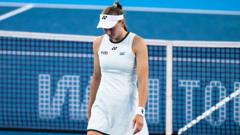
The road to tennis supremacy is paved with unexpected obstacles, and Elena Rybakina encountered one of the most disruptive variety on the Cincinnati hardcourt. What began as a promising quarter-final clash against Iga Swiatek transformed into a disappointing conclusion as the Kazakhstani champion was forced to withdraw due to injury, effectively halting her carefully constructed campaign to ascend past Aryna Sabalenka atop the world rankings.
Rybakina's presence in Cincinnati this year carried significant weight beyond the typical tournament narrative. Having established herself as one of tennis's most formidable hard-court competitors, she arrived in Ohio with clear ambitions of closing the gap on Sabalenka's top ranking. The mathematics of professional tennis reward consistency and deep runs in prestigious events, and the Cincinnati Masters—one of the sport's oldest and most respected tuneups before the US Open—offered the perfect staging ground for her ascension. With strong performances across multiple surfaces and a recent resurgence in confidence, Rybakina appeared positioned to make a genuine statement against the established order.
The Swiatek Challenge and Tournament Context
Facing Iga Swiatek in a quarter-final represented exactly the caliber of opponent one must overcome to win major tournaments and accumulate ranking points. The Polish star, a former world number one herself and a four-time Grand Slam champion, has proven herself an incredibly difficult adversary on any surface, though she has particularly flourished on clay. The matchup between these two elite competitors carried intrigue beyond mere points and rankings—it represented a clash between different playing philosophies and physical demands. Swiatek's aggressive baseline game and Rybakina's powerful serve and court positioning typically create compelling tennis, the kind of match that justifies the premium placed on Masters 1000 events.
Cincinnati holds special significance in the American tennis calendar as one of only nine Masters 1000 events on the circuit. Contested in late summer, it serves as a crucial final examination before the year's final Grand Slam at Flushing Meadows. Players use the week to assess their form, iron out technical issues, and build momentum heading into the most important two weeks of the season. For Rybakina, whose 2022 Wimbledon triumph demonstrated her capacity to perform under maximum pressure, Cincinnati represented an opportunity to show sustained excellence and close the psychological distance between herself and those ahead of her in the rankings.
The Injury Factor and Its Implications
The specifics of Rybakina's injury were not immediately elaborated upon, but the necessity of retirement speaks to the severity of the physical problem. In professional tennis, where players compete through pain and fatigue regularly, the decision to withdraw mid-tournament indicates something beyond typical discomfort. This is particularly significant given the stakes Rybakina placed on this tournament. No athlete willingly abandons such an important platform unless the body simply refuses to cooperate further. The timing is especially cruel—quarter-finals represent the threshold where the tournament draw genuinely opens up, where reaching the final becomes statistically more achievable and where ranking points increase substantially.
For context regarding Rybakina's career trajectory and world ranking aspirations, her pursuit of Sabalenka's number-one position represents a natural evolution following her breakthrough Wimbledon victory. Since that career-defining fortnight at the All England Club, Rybakina has gradually climbed the rankings through consistent performances in prestigious events. However, Sabalenka, a two-time Australian Open champion with formidable baseline power, has proven a resilient occupant of the top ranking. The gap between them is measured in points accumulated across rolling 52-week periods, meaning every tournament and every deep run carries mathematical significance.
The narrative surrounding rankings in modern tennis extends beyond mere statistics—it encompasses legitimacy, sponsorship appeal, and historical legacy. Being recognized as the world's best player carries cultural weight that transcends the sport itself. Rybakina's attempt to reach that pinnacle reflects not merely personal ambition but the emergence of new talent challenging established hierarchies. Her style of play—characterized by explosive serving power and aggressive groundstroke hitting—represents the current evolution of women's professional tennis, where physical athleticism and shot-making velocity have become paramount.
Injuries function as the great leveler in professional sports, indifferent to ranking position, seeding, or pre-tournament expectations. They remind us that even the most carefully constructed campaigns depend ultimately on bodily health and durability. Rybakina's withdrawal from Cincinnati, while disappointing for her immediate objectives, also raises broader questions about the demanding schedule players navigate and the accumulated toll of the modern tennis calendar. As the season barrels toward the US Open and other key autumn events, her recovery timeline becomes critical to her full-year objectives.
The immediate consequence of this Cincinnati retirement is the inevitable loss of ranking points and the missed opportunity to gain ground on Sabalenka. However, tennis is a sport where narratives extend across months and years rather than individual tournaments. Rybakina has demonstrated throughout her career an admirable resilience and capacity to return to competitive form following setbacks. The question now becomes not whether she can challenge for the number-one ranking—clearly she possesses the talent and determination—but rather whether this injury disrupts the momentum she had carefully built heading into the final stretch of the season.