Khachanov's masterclass exposes fragile Auger-Aliassime at Flushing
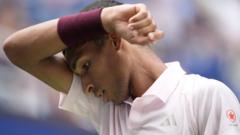
The US Open's second round delivered one of the tournament's most unexpected results when Karen Khachanov dismantled third-seeded Felix Auger-Aliassime, halting what many expected to be a formidable run from the Canadian talent. But this was no ordinary upset—the circumstances surrounding Auger-Aliassime's exit painted a troubling picture of a player fighting far more than just his opponent's tennis prowess. In the aftermath, the world number three revealed he had been battling debilitating physical symptoms throughout the match, describing a disorienting experience that fundamentally compromised his ability to compete at his usual elite standard.
Auger-Aliassime's candid assessment of his condition immediately captured attention across the tennis world. The 24-year-old Canadian explained that vertigo-like symptoms had plagued him during critical moments, leaving him unable to maintain his trademark precision and court positioning. "I was dizzy and seeing spots," he said, offering a window into the genuine physical ordeal that unfolded during his encounter with the Russian competitor. Such an admission from an athlete of Auger-Aliassime's caliber speaks volumes—this was not a case of simple underperformance or tactical miscalculation, but rather a body operating under severe constraint.
A Disrupted Tournament Narrative
Auger-Aliassime's withdrawal from contention represents a significant shift in the US Open narrative. As the third seed, he carried considerable expectations entering the hard-court major, regarded as one of the tournament's more dangerous threats given his recent form and demonstrated ability to navigate the demanding New York conditions. His seeding position reflected genuine credentials—the result of consistent performances throughout 2024 that had established him among the sport's elite tier. Many observers had privately penciled him in as a potential semifinalist, perhaps even a surprise finalist, making his abrupt exit a genuine shock to the tournament's projected trajectory.
The loss to Khachanov, while it produced an upset on paper, felt less like a complete tactical defeat and more like a circumstance where Auger-Aliassime was simply unable to deploy his full arsenal. Khachanov, a formidable competitor himself with considerable Grand Slam experience, proved capable of exploiting the situation, but the narrative remained fundamentally tied to Auger-Aliassime's physical distress rather than to any scintillating performance from the Russian. This nuance matters significantly when assessing the true competitive quality on display—Khachanov earned his victory, certainly, but against an opponent operating under substantial physical disadvantage.
Questions About Preparation and Health
The incident raises important questions about player preparation and health protocols leading into major tournaments. Grand Slam tournaments demand peak physical condition; players typically arrive after weeks of careful preparation designed to optimize fitness, mental acuity, and competitive readiness. That Auger-Aliassime arrived at the US Open only to encounter such disorienting symptoms suggests either an unexpected ailment developed late, or there were warning signs that perhaps weren't fully addressed beforehand. While the Canadian provided no specific diagnosis or explanation for the underlying cause, the symptoms he described—dizziness and visual disturbances—could stem from various sources ranging from dehydration and low blood sugar to more significant medical concerns.
For Auger-Aliassime personally, this represents a frustrating interruption to what has been an encouraging period of development. The past several years have seen him mature considerably as a competitor, moving beyond the youthful promise that surrounded him as a rising prospect to establish himself as a genuine heavyweight contender. His game possesses all the requisite elements for Grand Slam success: explosive serve, athleticism, tactical flexibility, and improving consistency. Yet the sport's unforgiving nature means that even players with superior talent cannot transcend physical limitations—the body must cooperate for the mind's excellence to translate into results.
Looking forward, Auger-Aliassime will presumably seek to understand what precipitated his experience at Flushing Meadows and implement whatever measures prove necessary to prevent recurrence. Whether it was a temporary ailment or something more persistent remains to be determined through proper medical evaluation. The tennis calendar offers little respite, however—tournaments follow in succession, and the window for recovery and preparation remains tight. How he responds to this setback, both physically and mentally, will carry implications for the remainder of his season and the trajectory of his career development.
Khachanov's unexpected victory, meanwhile, extends his own US Open campaign and offers him an opportunity to build momentum through subsequent rounds. While circumstances partially explain Auger-Aliassime's exit, Khachanov still required skill and competitiveness to capitalize on the situation. The Russian will carry the satisfaction of a meaningful second-round victory into his next match, though the broader tennis community will remember this result through the lens of Auger-Aliassime's misfortune rather than as a triumphant breakthrough performance.
The broader lesson for tennis audiences concerns the sport's often-overlooked reality: physical resilience underpins every great performance, and even elite players remain vulnerable to the unpredictable challenges that athletic competition presents. Auger-Aliassime's honest reflection on his struggle serves as a reminder that championship tennis, at its essence, demands not merely technical brilliance but also the capacity to persevere through adversity. His premature US Open exit, disappointing as it surely was, stands as testament to that fundamental truth.