From War-Torn Streets to Perfectionism: Djokovic's Relentless Hunger Explained
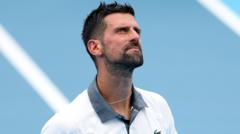
Novak Djokovic has never been one to shy away from examining the machinery of his own mind. Yet in a candid new documentary, the Serbian tennis titan ventures into territory that even his most devoted followers rarely glimpse: the psychological battleground where his greatest victories are often shadowed by his harshest critic—himself.
The discussion comes at a moment when Djokovic, having spent more than a decade atop the professional rankings, finds himself in a peculiar position of reassessment. Rather than simply accepting his status as one of the sport's immortals, he confronts a paradox that has defined much of his career: the way his internal drive, the very engine that has propelled him to 24 Grand Slam titles, simultaneously becomes a cage of impossible standards and perpetual self-examination.
The Weight of Self-Imposed Expectations
In reflecting on his relationship with doubt, Djokovic articulates a phenomenon that resonates far beyond the baseline. He describes how he often finds himself imprisoned by his own expectations—a self-imposed confinement that transforms even triumph into something requiring justification. This psychological architecture did not emerge from nowhere. Rather, it was constructed brick by brick during his formative years in Belgrade, a city that served as both sanctuary and proving ground for the person he would become.
The documentary traces this lineage explicitly, examining how Djokovic's childhood in Serbia—marked by the turbulence of the 1990s Balkans conflict and the gritty resilience required to pursue tennis in a region where the sport was far from a guaranteed path to glory—instilled in him a particular brand of hunger. This was not merely the ambition of a talented child seeking success; it was survival-driven, shaped by scarcity and the knowledge that opportunity was not abundant. In such circumstances, excellence becomes not an aspiration but a necessity, and anything less than perfection feels like failure.
Belgrade's Indelible Mark on Championship Psychology
What emerges from Djokovic's introspection is a portrait of how environment sculpts ambition into its most extreme forms. Growing up in Belgrade during economic hardship and social upheaval meant that tennis was not simply a game—it was a vehicle for transcendence, a way to transform circumstance into destiny. This formative reality became embedded in his psychological DNA, creating a player whose relationship with success would always carry the weight of that journey.
The documentary's exploration of this theme illuminates something crucial about Djokovic's career that statistics alone cannot capture. Yes, he has won more matches than almost any player in history. Yes, his records are staggering. But beneath these achievements lies a relentless internal voice that measures every performance against an ideal that exists only in his mind—a standard so elevated that even his greatest accomplishments carry undertones of incompleteness. This is the double-edged nature of the mentality forged in Belgrade: it has made him extraordinary, but it has also made peace with achievement nearly impossible.
The candor with which Djokovic addresses this struggle marks a significant moment in his public persona. For years, he has been portrayed—and has sometimes portrayed himself—as an almost robotic pursuer of perfection, a player whose confidence borders on the invulnerable. Yet this documentary reveals a more textured reality: a man acutely aware of his own psychological traps, acknowledging that the very qualities responsible for his dominance are also sources of internal conflict. The admission that he feels as though he imprisons himself speaks to a sophistication of self-awareness that transcends the typical athlete's interview.
For Djokovic, this conversation carries particular resonance as he navigates the later chapters of his career. The question of how to maintain the hunger and drive that built his legacy while simultaneously finding liberation from the tyranny of impossibly high standards is one that many aging champions face. But for Djokovic, shaped by a childhood where mediocrity was not an option, finding that balance proves exponentially more difficult. The documentary suggests that understanding this tension—rather than simply overcoming it—may be the truest form of growth available to him at this stage.
Ultimately, what Djokovic articulates in this new project is a recognition that the same psychological architecture that built the Djokovic we know—the uncompromising competitor, the records-breaker, the player who seemed to find another gear when the moment demanded it—is also the source of an internal struggle that may never fully resolve. In naming this paradox, in allowing cameras to document his grappling with it, he offers something valuable to the broader conversation about what it takes to sustain excellence at the highest levels of sport: the understanding that greatness and inner conflict are not opposites, but often intertwined aspects of the same complex psychological reality.