Britain Reasserts Wheelchair Doubles Supremacy With Fifth World Team Cup Victory
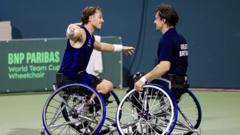
The sunshine of Florida witnessed another glorious chapter in British wheelchair tennis history as Great Britain etched its name onto the World Team Cup trophy for an unprecedented fifth occasion. In a thrilling contest that showcased the very best of competitive spirit and technical excellence, the British contingent outmaneuvered their Japanese counterparts with a decisive 2-1 victory, further solidifying the nation's dominance in the sport's most prestigious team competition.
The triumph represents far more than a simple addition to the trophy cabinet—it underscores Britain's remarkable trajectory in wheelchair tennis over the past decade. With Alfie Hewett and Gordon Reid at the helm of this latest campaign, the British team demonstrated the depth of talent and experience that has become synonymous with the nation's wheelchair tennis program. These two athletes, who have individually accumulated numerous Grand Slam titles and international accolades, proved once again why they remain fixtures among the sport's elite competitors when representing their country on the team stage.
Hewett and Reid: A Partnership Forged in Excellence
The backbone of Britain's success lay in the stellar performances delivered by Hewett and Reid, whose partnership has become legendary in wheelchair tennis circles. Both players have spent years perfecting their craft, competing at the highest echelons of singles and doubles competition across the Grand Slams and international tour events. When they unite for team competition, the combination of their experience, tactical acumen, and competitive hunger becomes nearly insurmountable. Their contributions to this World Team Cup victory exemplify the commitment these athletes bring whenever they don the British colors.
Throughout the tournament in Florida, Hewett and Reid faced the kind of rigorous opposition that makes any team championship genuinely consequential. The Japanese team, a perennial force in wheelchair tennis with its own rich tradition of excellence, provided formidable resistance. The matches themselves were characterized by the high-quality rallies and dramatic moments that have come to define modern wheelchair tennis—a sport that has evolved dramatically in terms of athleticism, tactical sophistication, and global competitiveness over the past two decades.
Britain's Dynasty in Team Competition
This fifth World Team Cup title represents the culmination of sustained investment, strategic development, and the natural emergence of homegrown talent within the British wheelchair tennis ecosystem. The nation has transformed itself from a peripheral player to an absolute powerhouse in this particular sphere of the sport. Each championship won adds another layer to Britain's legacy, and the consistency required to achieve such success—winning five titles in a competition of this magnitude—speaks volumes about the quality of the player development system and the culture of excellence that pervades the program.
The World Team Cup itself holds a special place in the wheelchair tennis calendar. Unlike the week-to-week grind of the individual circuit, where players chase ranking points and titles that define careers, team competition introduces an element of national pride and collective purpose that transcends personal achievement. Athletes who might be fierce rivals in singles draws become allies, united in pursuit of glory for their country. This dynamic creates a unique atmosphere and intensity that seasoned professionals invariably identify as among the most rewarding experiences of their careers. For Hewett and Reid, adding another team championship to their résumés only enhances their standing as complete competitors capable of delivering in every context the sport demands.
The victory in Florida also carries implications for wheelchair tennis at the international level. Great Britain's repeated success in team competition demonstrates that sustained excellence requires not merely individual stars but a systematic approach to talent identification, coaching, and competition preparation. The infrastructure that supports British wheelchair tennis—from grassroots development through to elite professional support—has clearly fostered an environment in which athletes like Hewett and Reid can thrive while simultaneously inspiring the next generation of competitors to aspire toward similar achievements.
Japan's performance in this final, while ultimately unsuccessful, should not be diminished by the result. The Japanese wheelchair tennis program has long been a beacon of consistency and quality in Asia, and reaching another World Team Cup final demonstrates the country's enduring competitiveness at the sport's highest level. The match itself, decided by a 2-1 margin, indicates that the competition was genuinely contested and that the outcome remained in doubt until the final moments—the hallmark of any truly satisfying championship encounter.
As the British delegation departed Florida with the World Team Cup in their possession, the achievement resonated across the wheelchair tennis community as further validation of the sport's exponential growth and the remarkable individuals who compete at its peak. For Hewett and Reid specifically, the success adds another prestigious team accolade to careers already decorated with individual accomplishments. For British wheelchair tennis more broadly, the fifth championship represents not a stopping point but rather a milestone that will undoubtedly fuel ambitions for continued success in competitions yet to come. The standard has been set, the legacy has been extended, and the bar for future challengers has been raised once again.