Djokovic Marches On in Beijing Despite Extending Winless Streak
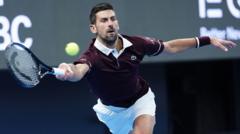
The pursuit of championship glory continues for Novak Djokovic at the China Open in Beijing, where the legendary Serbian competitor emerged victorious from a demanding quarterfinal encounter against Alexander Zverev. The match represented another significant milestone in Djokovic's ongoing campaign to capture his first title of 2026, a goal that has thus far eluded him as the season enters its middle stages. For a player accustomed to adorning his trophy cabinet with regularity, the absence of silverware this year represents an unusual chapter in an otherwise decorated career.
Djokovic's victory over Zverev propels him into the semifinals of the prestigious Beijing tournament, one of the ATP's most competitive events held annually on the Chinese calendar. The magnitude of reaching this stage cannot be understated, as Djokovic inches closer to potential tournament glory and the elusive first title that has proven frustratingly distant through the opening months of 2026. The match itself demonstrated the physical and mental demands required at the highest level of professional tennis, with both competitors showcasing the technical mastery and competitive fire that has defined their respective careers.
The Battle Against Zverev: A Test of Resolve
The quarterfinal clash between Djokovic and Zverev unfolded as a testament to the enduring quality of both players, despite the various challenges that have affected professional tennis in recent years. Zverev, the talented German player capable of producing stunning tennis on any given day, proved to be a formidable obstacle in Djokovic's path toward the final stages. The match contained the hallmarks of high-level competition—precise groundstrokes, strategic shot-making, and fluctuating momentum that kept spectators engaged throughout. Djokovic's ability to navigate the complexity of Zverev's game and emerge with his hand raised speaks to his continued capacity to compete at elite standards, a reassuring sign for those who have followed his career trajectory with keen interest.
The contest demanded that Djokovic summon his vast reservoir of experience and tactical acumen. Throughout his career, the Serb has demonstrated an unparalleled ability to adapt within matches, reading opponents' patterns and adjusting his positioning and shot selection accordingly. Against Zverev, these qualities proved decisive. The German challenger, known for his powerful serve and aggressive baseline game, presented a specific set of challenges that required Djokovic to remain mentally engaged and physically sharp across all phases of the encounter. The victory adds another data point to the ongoing narrative of Djokovic's resilience and competitive hunger.
The Context of a Trophyless Campaign
What renders Djokovic's progression through the China Open bracket particularly noteworthy is the context in which it occurs—a season largely devoid of the championship celebrations that have punctuated his career with remarkable consistency. Entering 2026 without a title to his name represents a departure from the norm for a player whose collection of Grand Slam and Masters-level trophies ranks among the most impressive in the history of professional tennis. Observers and analysts have closely monitored his form, speculating about the various factors that might have contributed to this unusual stretch without championship success. His advancement past Zverev suggests that the machinery, though perhaps not running at absolute peak efficiency, remains capable of functioning at the highest operational level when circumstances align.
The Beijing tournament presents an genuine opportunity for Djokovic to break this particular drought and reclaim the winning sensation that has defined so much of his professional existence. The proximity to championship glory, now just two victories away, provides substantial motivation for a competitor of his stature. His semifinal appearance guarantees that he remains in contention at a significant international event, a position that many players would cherish given the competitive depth that characterizes modern professional tennis. For Djokovic, however, anything short of ultimate triumph might feel like an incomplete endeavor, given his historical standards and the symbolic importance of capturing a title during this challenging portion of his campaign.
The significance of reaching the semifinals extends beyond the immediate tournament context. It reinforces that despite any perceived vulnerability or form concerns, Djokovic retains the fundamental capabilities that have sustained his dominance across two decades of professional tennis. His tactical flexibility, serving proficiency, and mental fortitude proved sufficient to dispatch Zverev's challenge, characteristics that will presumably remain on display as he contemplates the challenges ahead. The road toward championship glory at the China Open now narrows considerably, with only the most formidable remaining competitors standing between Djokovic and his first trophy of the calendar year.
As the tournament progresses toward its conclusion, all eyes will inevitably focus on whether Djokovic can finally translate his progress into the tangible reward of championship success. The semifinals beckon with promise and possibility, offering a stage upon which he might inscribe his name once more upon the record books of Beijing tennis triumph. For a player of his caliber and historical achievement, such opportunities represent the ultimate professional objective—the chance to validate one's presence in elite competition and to continue the winning legacy that has defined his extraordinary career spanning multiple decades.