Zverev's Moment of Truth: Blocking Sinner's Historic Wimbledon Encore
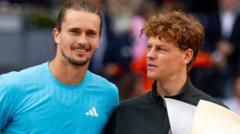
The narrative surrounding Jannik Sinner's bid to capture a second consecutive Wimbledon title has been one of quiet confidence mixed with a healthy dose of respect for his opposition. As the Italian sensation approaches the grass court final at the All England Club, the statistical evidence appears to favour a successful defence of his crown. Yet beneath the surface optimism lies a creeping wariness about the man standing between him and immortality: Alexander Zverev, the recently crowned French Open champion whose clay court mastery suggests a player fundamentally transformed by recent triumphs.
Sinner arrives at this juncture having demonstrated remarkable consistency across multiple surfaces throughout the season. His previous victory at Wimbledon established him as a serious contender on grass, a surface traditionally less suited to his baseline-oriented game. The follow-up campaign has only reinforced that impression, with the young Italian showing an almost preternatural ability to adapt his attacking instincts to the unique demands of lawn tennis. His movement remains fluid, his first-serve effectiveness has sharpened considerably, and his tactical acumen suggests a player who has studied his craft with scientific precision. For most opponents, this combination of attributes would inspire considerable dread.
Yet Zverev's emergence as a Grand Slam champion cannot be dismissed as mere happenstance or a fortunate draw. The German's triumph at Roland Garros represents something far more significant—a watershed moment in a career that has long promised greatness without delivering it consistently. Clay, traditionally the surface that has frustrated him most relative to his enormous talent, has become his proving ground. This transformation speaks to a competitor who has evidently addressed the mental and technical shortcomings that previously undermined his potential. When such a recalibration occurs at the highest level of professional tennis, it rarely remains confined to a single surface.
The Grass Court Equation: Where History and Uncertainty Collide
Sinner's historical record at Wimbledon does indeed suggest that the overwhelming probability favours the defending champion. The precedent is compelling: grass courts have historically been more forgiving to those who have proven their mastery on them before. Repetition breeds familiarity, and familiarity breeds confidence. Sinner has walked these same corridors, played these matches, and emerged victorious. He understands the specific angles that the courts demand, the height of the bounce, the speed at which rallies must conclude to prevent opponents from establishing rhythm.
However, this is precisely where Sinner's caution becomes strategically sound rather than merely pessimistic. Zverev's recent form trajectory suggests a player whose confidence is at an unprecedented apex. A French Open victory does not simply confer statistical advantage; it provides psychological ballast that can translate across all surfaces. The German arrives at the final as a man who has just defeated the world's elite on their least favourite surface—a feat that requires the kind of mental fortitude and technical excellence that knows no geographical boundaries. His groundstrokes, which have always been among the most devastating in professional tennis, remain undiminished on grass. His serve, a perennial weapon, becomes even more effective on a surface that rewards pace and precision.
Strategic Implications and the Road Ahead
What makes this particular final so compelling is the collision of narrative arcs. Sinner represents continuity, the established order, the player who has already navigated this mountain and planted his flag at its summit. Zverev represents disruption, the challenger who has finally synthesized his considerable gifts into Grand Slam-winning tennis, and who arrives without the burdensome expectations of defending something already achieved. This psychological dynamic cannot be underestimated in tennis, where mental equilibrium often determines the outcome of contests between similarly talented combatants.
The Italian's wariness, when examined closely, reflects not weakness but maturity. Sinner is essentially acknowledging that the tennis landscape has shifted beneath his feet. Zverev is no longer merely a talented player capable of raising his game against elite opposition—he is now a Grand Slam champion, a designation that fundamentally alters how opponents must approach and execute their tactical plans. The German has earned the right to be considered not as an underdog with something to prove, but as a player who has already proven it on the sport's biggest stage. That distinction matters immensely in terms of pressure distribution and tactical preparation.
As these two titans prepare to collide on the sacred lawns of the All England Club, the outcome remains genuinely uncertain. Sinner's pedigree on this surface and his demonstrated ability to perform when championships hang in the balance suggest that the weight of probability remains in his favour. Yet Zverev's recent elevation to Grand Slam champion status, combined with his historically exceptional all-court abilities and current trajectory of improvement, means that conventional wisdom cannot be applied with complete confidence. This final promises to be neither a coronation nor a coronary—but rather a compelling examination of two different paths to excellence converging at precisely the moment when both players are most prepared to unleash everything they possess.