Heat Takes Its Toll: Alexandrova's Memphis Dream Ends in Medical Emergency
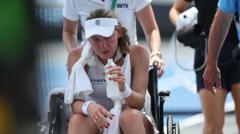
The Memphis Classic witnessed a sobering moment on court as Russian tennis professional Ekaterina Alexandrova succumbed to the oppressive heat during her opening-round encounter, ultimately unable to continue competing and forced into retirement. The world number 19, a formidable competitor on the professional circuit, found herself battling not only her opponent but the treacherous environmental conditions that pushed her body beyond its limits. With temperatures soaring to 34 degrees Celsius, the match became a battle of survival rather than sport, ultimately resulting in Alexandrova's withdrawal and raising fresh concerns about player safety at professional tennis events.
When Conditions Become Untenable
The incident underscores an ongoing tension within professional tennis regarding the boundaries between competitive toughness and genuine health risk. Players are trained to endure pain, push through fatigue, and overcome mental challenges during matches—these are badges of honour in the sport. However, the physiological limits of the human body are immutable. Extreme heat poses objective dangers that transcend mental fortitude: heat stroke, dehydration, and cardiovascular strain are genuine medical emergencies that can have lasting consequences. Alexandrova's collapse represents a moment where the sport's relentless demands met the unforgiving realities of playing in dangerous conditions.
The Memphis Classic, held in Tennessee during the early part of the tennis calendar, had transformed into an unexpectedly harsh environment. At 34 degrees Celsius with likely elevated humidity levels, outdoor court conditions become hazardous even for athletes in peak physical condition. Professional tennis players undergo rigorous physical preparation and conditioning to withstand demanding match play, yet even their enhanced capabilities have limits. The combination of sustained physical exertion, cardiovascular demands, and exposure to intense heat creates a perfect storm for medical emergencies. Alexandrova's experience demonstrates that even world-ranked players cannot simply will themselves through conditions that pose genuine physiological danger.
A Worrying Pattern in Modern Tennis
This incident is not an isolated occurrence but rather symptomatic of a broader concern within professional tennis. Tournament scheduling, particularly in early-season events across diverse climates, often forces players to compete in suboptimal conditions. While the sport has made strides in implementing heat protocols—including cooling breaks and medical monitoring—these measures exist precisely because of the acknowledged risks. The question remains whether current safeguards are sufficiently protective, or whether tournaments must consider more dramatic interventions such as rescheduling matches, modifying court surfaces to reduce radiant heat, or implementing stricter temperature thresholds that mandate match postponements.
Alexandrova, a respected presence on the women's professional circuit, has established herself as a competitive force despite facing numerous challenges throughout her career. Her ranking of number 19 reflects years of consistent tournament performance and development as a top-tier player. The forced withdrawal from Memphis represents not merely a lost opportunity to accumulate ranking points and prize money, but a reminder of the vulnerability all athletes face when environmental factors spiral beyond acceptable parameters. For a player of her calibre, the mental frustration of withdrawal due to external conditions rather than tactical failure or physical injury is particularly acute.
The broader implications of this incident extend beyond a single player's disappointing exit from a tournament. It raises important questions about tournament obligations to competitors and the standards that should govern professional athletics. Medical professionals and tournament directors must continuously evaluate whether existing heat protocols provide adequate protection. The retirement of a top-20 ranked player due to dangerous conditions provides empirical evidence that current measures may prove insufficient during particularly severe weather events. As global temperatures continue their upward trajectory, these concerns will likely intensify, demanding proactive policy responses from tennis governing bodies.
Looking ahead, the Memphis Classic and similar events will need to address how they manage future tournaments under high-heat conditions. This might involve scheduling matches during cooler parts of the day, increasing the frequency of medical breaks, providing enhanced courtside medical support specifically trained in heat-related illness, or establishing clear temperature thresholds that trigger match postponement. Players themselves bear some responsibility through proper hydration, electrolyte management, and understanding their own physical limits, yet the burden ultimately rests with tournament organisers to create conditions where competition remains safely possible.
Alexandrova's collapse and retirement, while unfortunate, serves as a valuable catalyst for ongoing dialogue about player safety standards in professional tennis. The sport has evolved tremendously in recent decades regarding medical support, injury prevention, and athletic care, yet environmental hazards present unique challenges that require continued innovation. As the tennis calendar expands and tournaments operate in increasingly diverse climates, ensuring that competition never demands more from athletes' bodies than is medically safe must remain paramount. The unwelcome sight of a world-ranked professional succumbing to heat on court should prompt immediate reflection and meaningful action from all stakeholders committed to protecting players while preserving the competitive integrity of the game.